Wyoming Geological Association
Where Geoscientists Come to Explore and Learn
Wyoming Geological Association

| Event Date | 12-05-2025 11:15 am - 1:00 pm |
| Capacity | 40 |
| Individual Price | $25.00 |
| Event Date | 12-05-2025 5:30 pm - 6:30 pm |
| Capacity | Unlimited |
| Individual Price | Free |
Abstract and Bio coming soon
| Event Date | 12-12-2025 11:15 am - 1:00 pm |
| Capacity | 65 |
| Individual Price | $25.00 |

| Event Date | 12-13-2025 5:00 pm - 8:00 pm |
| Capacity | 140 |
| Individual Price | No Charge |

| Event Date | 12-25-2025 |
| Event End Date | 12-25-2025 |
| Capacity | Unlimited |
| Individual Price | Free |
| Event Date | 01-09-2026 5:30 pm - 6:30 pm |
| Capacity | Unlimited |
| Individual Price | Free |
| Event Date | 01-10-2026 5:30 pm - 6:30 pm |
| Capacity | Unlimited |
| Individual Price | Free |
Fossil Birds of Wyoming
J. P. Cavigelli, The Tate Geological Museum
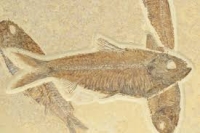
Wyoming is well known for its fossils of all kinds. Dinosaurs are probably the most famous. They were first discovered here in the late 1800’s and are still being uncovered and studied nowadays. Fossil fishes from the southwest corner of the state are mined by the thousands and sold in rock shops all over the world. Wyoming also has great deposits of fossil mammals, and reptiles such as crocodiles and turtles. But what about birds? In general, bird fossils are generally very uncommon. This is mainly due to the fragile nature of bird bones; birds tend to decompose before they get a chance to become fossils. Bird fossils are generally found in deposits that are intensively collected. Despite their rarity, many bird fossils have been found in Wyoming, including some of the best in the world. Let’s go birdwatching in ancient
Wyoming!
JP Cavigelli was born back east in the summertime, of Swiss immigrant parents (from the type Jurassic area). He is prep lab manager and field trip organizer and collections manager at that Tate Geological Museum at Casper College. As a biology major at the University of Chicago, JP became interested in paleontology, although way too late to get a degree in it. This led him to a summer spent in Wyoming (mostly in the Big Horn Basin) in 1983 doing field work in search of small Cretaceous mammal teeth with a University of Wyoming team. JP fell in love with Wyoming but left for a five year adventure in fun and poverty as a ski bum and whitewater rafting guide in Colorado and Australia. JP came back to Wyoming in 1990 to be part of a paleontology field crew at the UW again. He lived in Laramie working off and on in paleontology for 14 years, doing field work as well as a two year post as the Collections Manager for the UW's Dept. of Geology and Geophysics. He also was a fossil outfitter, running Western Paleo Safaris for six years. For the past 25 or so years, JP has been doing freelance fossil preparation in his personal prep lab. He has had the good fortune of having been invited to join international paleontological expeditions to Niger, Mongolia, Tanzania, Alaska and North Dakota. In his 19 years at the Tate Museum he has led collecting trips all over the state to collect small and large fossils from Dee the Mammoth and Lee Rex to microscopic mammal teeth and really old insects and ichthyosaurs. When he is not involved with fossils JP enjoys birdwatching, traveling, and hanging out with his supercalifragilisticexpialidocious wife (they were married on a dinosaur skeleton).
| Event Date | 01-16-2026 11:15 am - 1:00 pm |
| Capacity | 40 |
| Individual Price | Members $25, Non-Members $30, Students $10 |

Society of Petroleum Engineers - Distinguished Lecturer Program
"Ten Secrets of Production Optimization Using Artificial Intelligence (AI)"
Alexander (Sandy) Williams, ChampionX
Abstract
Production optimization lends itself nicely to the use of Artificial Intelligence (AI) because computers are very good at monitoring surveillance data, spotting changes in operating parameters, and carrying out boring, repetitive tasks.
By combining real-time data, production tests, and nodal analysis with artificial intelligence, it is possible for computers to perform powerful well surveillance to identify problems and opportunities automatically. By capitalizing on AI, engineers can boost well production 6–8%.
The use of AI allows engineers to manage many more wells effectively. Case studies will be presented to show how AI has been used to perform simple tasks and even advanced pattern recognition to identify specific well problems. This lecture will provide ten secrets of how to be successful in using AI to optimize your producing wells.
Biography
Alexander “Sandy” Williams has worked in the petroleum industry for 34 years. He founded Artificial Lift Performance Ltd. (ALP), which is now a part of ChampionX. ALP developed a software application to help operators monitor, analyze, and optimize wells using artificial lift. This software has empowered engineers to make decisions quickly to maximize production of more than 6,000 wells.
Sandy began his career at Amoco, then worked at Phoenix Schlumberger Artificial Lift before becoming a consultant focused on artificial lift and production optimization. He has worked and lived in the USA, Oman, Venezuela, Ecuador, and Colombia, so he is fluent in Spanish. He has taught over 200 courses related to production optimization and artificial lift and has authored 15 technical papers on those subjects.
| Event Date | 01-23-2026 11:15 am - 1:00 pm |
| Capacity | 40 |
| Individual Price | Members $25, Non-Members $30, Students Free |
Abstract: Wyoming has long been known for its wealth of dinosaur remains, and among its most famous fossils date from the end of the Cretaceous period. North America’s largest carnivorous dinosaur, Tyrannosaurus, was found in Wyoming, and the first dinosaur found in Wyoming, the horned Triceratops, dates from the Late Cretaceous as well. This presentation will highlight some of Wyoming’s more interesting Late Cretaceous dinosaur species, and touch on how anatomists, palaeontologists and artists can work together to reconstruct the appearance of the living animal. Finally, we’ll have a look at how the study of sediments and plant fossils can provide clues about the landscape and flora of the dinosaurs’ environment, and allow us to visualize the world in which they lived.
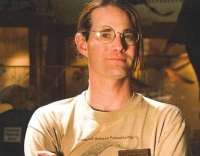
Bio: Russell J. Hawley is the Education Specialist at the Tate Geological Museum at Casper College in Wyoming, where he gives tours and produces artwork for museum displays. He also contributes a palæontology question and answer column to the museum newsletter. Russell has worked at the museum since 1997 and has been digging up fossils in Wyoming since 1990. He illustrated Islands in the Cosmos: the Evolution of Life on Land by Palæontologist Dr. Dale Russell. His one-man art show, ‘A Thousand Unnamed Worlds,’ was on display for a year at the Wyoming State Museum in Cheyenne.
| Event Date | 02-20-2026 11:15 am - 1:00 pm |
| Capacity | 40 |
| Individual Price | Members $25, Non-Members $30, Students $10 |
Find Out What's Happening at WGA
View current and archived issues of "Contact" the Wyoming Geological Association Newsletter.
Website Design by Waves Web Design.